Self-Funding Solar

Service

Solar installation

Scheme

No upfront cost Solar Install

Affects

UK Homeowners

Turn your energy bills into an investment with self-funded solar. Designed for homeowners with higher monthly electricity costs.

If your electricity bill is over £80 per month, you could qualify for a self-funded solar installation where energy savings and export payments help cover the system cost over time.
How Self-Funded Solar Works

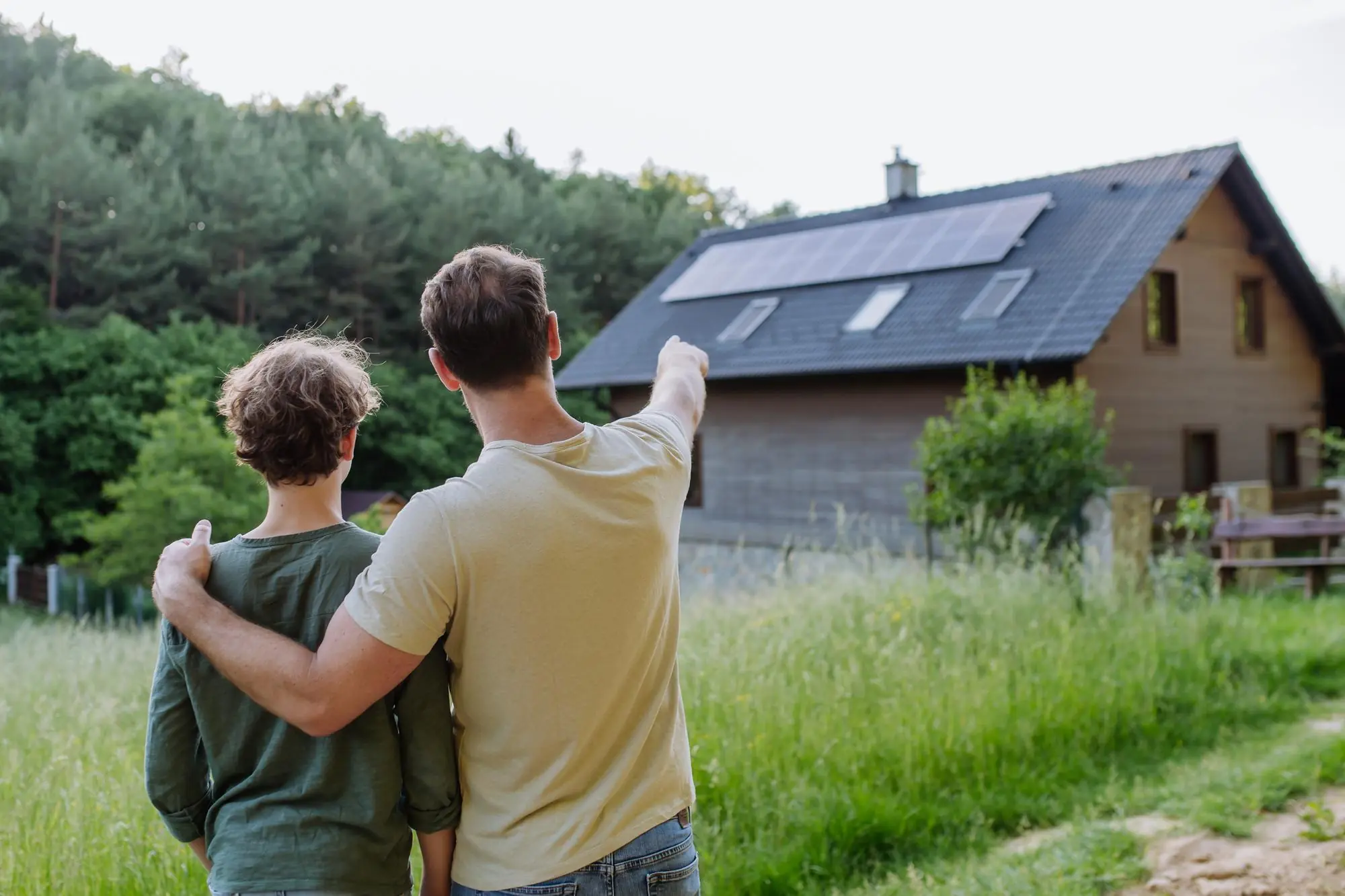
Our self-funded solar model allows eligible UK homeowners to install solar panels without paying the full cost upfront.

If your household electricity bill is typically above £80 per month, your property may generate enough solar energy to:

  • Reduce the electricity you buy from your supplier

  • Sell excess energy back to the grid

  • Use export payments to offset installation costs over an agreed term

The income generated through exported electricity helps cover the cost of the system, making solar more accessible without large upfront investment.
Portfolio project image

Eligibility Requirements

To qualify for this solar model, homeowners must:

  • Be a UK homeowner

  • Have an average electricity bill of £80+ per month

  • Be 59 years old or younger

  • Not plan to move property within the next 5 years

This ensures the system has enough time to generate the projected savings and export income needed to cover installation costs.

All systems are:

  • MCS certified

  • Installed by accredited professionals

  • Backed by EPVS-approved standards

  • Connected to the Smart Export Guarantee (SEG) for selling power back to the grid
Maybe we have answered it already

Got Questions?

Got Questions?

Got Questions?

01/

How do solar panels work in UK climate? It’s always cloudy!

Yes! Solar panels work best on long, sunny days, but they don’t need direct sunlight to generate power. On a cloudy day, there’s still light which your panels can convert into energy. In fact, solar panels tend to operate more efficiently in lower temperatures. Its the UV light which generates the power, that is there all year round! In summer you’ll generate more power: likely more power than you actually need, so you can sell the excess back to the grid. But even in the depths of winter when the temperature is below zero, your panels will work. Snow and rain aren’t usually an issue either – unless there’s really heavy snowfall.

02/

Do my panels require constant maintenance?

Solar systems have very few moving parts, so maintenance is minimal. On your lease system you will receive maintenance whenever required.

03/

Will my solar panels damage my roof?

Our panels are installed by professionals who are trained to the highest degree. When installed correctly, panels actually protect the roof from weather exposure.

04/

Will solar panels make my house look ugly?

The old panels maybe, however our black on black panels are sleek and modern. They aren’t noticeable due to low profile mounting systems.

05/

Is my roof suitable for solar?

Most sloped roofs in good condition in the UK are suitable for solar panels. Your roof needs to be strong enough to support the weight of solar panels, but this is rarely an issue. We’ll inspect your roof thoroughly before going ahead with any installation. If we have any doubts, we’ll let you know. The optimum roof for solar panels is south-facing with no shading from trees or other buildings, and angled at around 40 degrees (which most sloped residential roofs are!) But this doesn’t mean other roofs can’t have an effective solar system. East-facing and west-facing solar panels can be very productive. Your roof might not be suitable for solar if: * It’s north facing – since it won’t get much sunlight to generate electricity * It’s flat – we currently don’t offer flat roof installations because of the complexity and extra costs involved * It’s very small, or obstructed – you need enough space to lay around six panels at minimum

06/

How long do solar panels last?

Typically, solar batteries need replacing after 10-12 years. That’s when they tend to start operating at below 70% of their original capacity. With Sunsave Plus, we’ll give you a free battery upgrade when yours stops performing.

07/

Can I charge my electric vehicle with solar power?

Yes, you can use your solar panels to charge your EV. If your car is charging whilst your panels are generating power, some of this electricity will go into your EV battery. You can also get yourself a ‘solar’ charger (also known as a ‘smart’ charger), which makes sure your car only charges up on the electricity from your panels.  But unless you really love the idea of ‘driving on sunshine’, this is rarely the best choice for your wallet. We usually recommend signing up to an EV tariff that lets you charge your car with cheap grid electricity overnight. Instead, you can use your solar-generated electricity for your home’s energy needs, and sell the rest to the grid.

08/

How do solar panels work?

A solar photovoltaic (PV) panel is made from many cells made from layers of semi-conducting material, most commonly silicon. When light shines on this material, it creates a flow of electricity as ‘direct current’ (DC). A device called an inverter turns that DC into ‘alternating current’ (AC), which can then flow into your home to power your lights and appliances. The solar panels don’t need direct sunlight to work, and they’ll even work on cloudy days. The stronger the sunshine, the more electricity generated, but solar panels still work in winter!

01/

How do solar panels work in UK climate? It’s always cloudy!

Yes! Solar panels work best on long, sunny days, but they don’t need direct sunlight to generate power. On a cloudy day, there’s still light which your panels can convert into energy. In fact, solar panels tend to operate more efficiently in lower temperatures. Its the UV light which generates the power, that is there all year round! In summer you’ll generate more power: likely more power than you actually need, so you can sell the excess back to the grid. But even in the depths of winter when the temperature is below zero, your panels will work. Snow and rain aren’t usually an issue either – unless there’s really heavy snowfall.

02/

Do my panels require constant maintenance?

Solar systems have very few moving parts, so maintenance is minimal. On your lease system you will receive maintenance whenever required.

03/

Will my solar panels damage my roof?

Our panels are installed by professionals who are trained to the highest degree. When installed correctly, panels actually protect the roof from weather exposure.

04/

Will solar panels make my house look ugly?

The old panels maybe, however our black on black panels are sleek and modern. They aren’t noticeable due to low profile mounting systems.

05/

Is my roof suitable for solar?

Most sloped roofs in good condition in the UK are suitable for solar panels. Your roof needs to be strong enough to support the weight of solar panels, but this is rarely an issue. We’ll inspect your roof thoroughly before going ahead with any installation. If we have any doubts, we’ll let you know. The optimum roof for solar panels is south-facing with no shading from trees or other buildings, and angled at around 40 degrees (which most sloped residential roofs are!) But this doesn’t mean other roofs can’t have an effective solar system. East-facing and west-facing solar panels can be very productive. Your roof might not be suitable for solar if: * It’s north facing – since it won’t get much sunlight to generate electricity * It’s flat – we currently don’t offer flat roof installations because of the complexity and extra costs involved * It’s very small, or obstructed – you need enough space to lay around six panels at minimum

06/

How long do solar panels last?

Typically, solar batteries need replacing after 10-12 years. That’s when they tend to start operating at below 70% of their original capacity. With Sunsave Plus, we’ll give you a free battery upgrade when yours stops performing.

07/

Can I charge my electric vehicle with solar power?

Yes, you can use your solar panels to charge your EV. If your car is charging whilst your panels are generating power, some of this electricity will go into your EV battery. You can also get yourself a ‘solar’ charger (also known as a ‘smart’ charger), which makes sure your car only charges up on the electricity from your panels.  But unless you really love the idea of ‘driving on sunshine’, this is rarely the best choice for your wallet. We usually recommend signing up to an EV tariff that lets you charge your car with cheap grid electricity overnight. Instead, you can use your solar-generated electricity for your home’s energy needs, and sell the rest to the grid.

08/

How do solar panels work?

A solar photovoltaic (PV) panel is made from many cells made from layers of semi-conducting material, most commonly silicon. When light shines on this material, it creates a flow of electricity as ‘direct current’ (DC). A device called an inverter turns that DC into ‘alternating current’ (AC), which can then flow into your home to power your lights and appliances. The solar panels don’t need direct sunlight to work, and they’ll even work on cloudy days. The stronger the sunshine, the more electricity generated, but solar panels still work in winter!

Other ways to save

See the other schemes

Check if you qualify now

Back to top

Back to top

Let's start saving you money on your home.

Let’s make an impact for you, your home, and the environment.

Book in a call and we will answer every single question for you, see where your installs are at or even what do they qualify you for.

Copyright © Eco4Everyone Ltd, 2026

Check if you qualify now

Back to top

Back to top

Let's start saving you money on your home.

Let’s make an impact for you, your home, and the environment.

Book in a call and we will answer every single question for you, see where your installs are at or even what do they qualify you for.

Copyright © Eco4Everyone Ltd, 2026

Check if you qualify now

Back to top

Back to top

Let's start saving you money on your home.

Let’s make an impact for you, your home, and the environment.

Book in a call and we will answer every single question for you, see where your installs are at or even what do they qualify you for.

Copyright © Eco4Everyone Ltd, 2026